Car dealerships have never had more ways to market themselves.
Social media.
Vehicle videos.
Google Ads.
Meta advertising.
YouTube.
Inventory feeds.
Email.
SEO.
Third-party marketplaces.
CRM campaigns.
OEM programs.
And yet, inside many dealerships, none of it feels particularly connected.
A campaign launches.
A promotion ends.
A new model arrives.
A vendor changes.
Someone posts a few videos.
The month closes.
Then much of the marketing machine effectively starts again.
The problem is not activity.
The problem is continuity.
Dealership Marketing Keeps Resetting
Most automotive marketing is still organized around individual campaigns, platforms + vendors.
Each one may perform a useful function.
But collectively, they can create a fragmented customer experience.
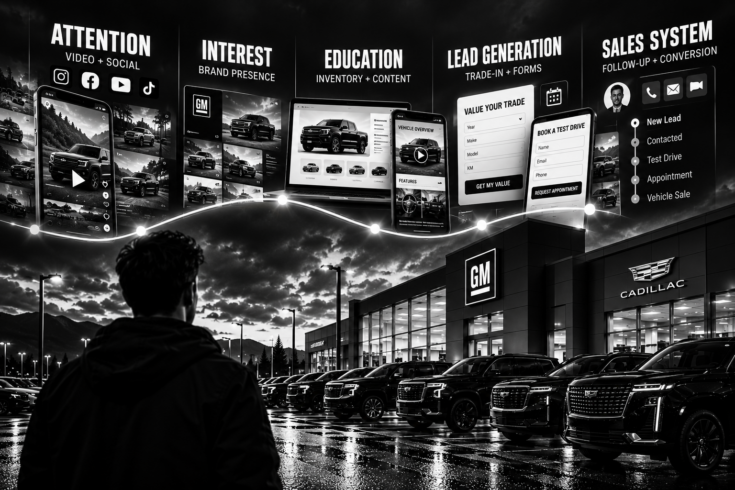
The shopper who watches a vehicle video today may search for that model next week, visit the dealership website two weeks later, encounter another ad a month from now + submit a lead much later.
To the customer, that is one buying journey.
Inside the dealership, those interactions are often treated as separate marketing events.
That disconnect matters.
The Automotive Customer Journey Is Bigger Than the Lead
The lead is not the beginning of the customer journey.
It is simply the moment the customer becomes identifiable.
Before that moment, they may have already spent weeks or months:watching vehicle videos, researching models, comparing dealerships, reading reviews, visiting inventory pages, seeing social content + encountering advertising.
The dealership that stays visible throughout that process has an opportunity to accumulate familiarity + trust long before someone fills out a form.
That is why automotive marketing needs to be designed around the customer journey, not merely lead generation.
Video Should Be Working Across the Entire Journey
Video is especially powerful because it can do far more than advertise inventory.
It can introduce the dealership.
Explain vehicles.
Answer questions.
Show new arrivals.
Build salesperson familiarity.
Demonstrate features.
Support retargeting.
Educate existing leads.
Strengthen follow-up.
And continue influencing customers after they enter the CRM.
Yet dealerships frequently use video as isolated content rather than infrastructure.
A video gets posted.
It receives some views.
Then everyone moves on.
That leaves enormous value on the table.
One strong video should be capable of working across multiple stages of the customer journey.
Stop Building Campaigns. Start Building Continuity.
The better model is not necessarily more marketing.
It is connecting what already exists.
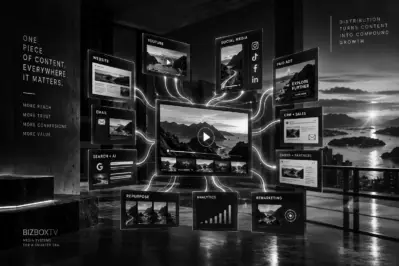
Content creates attention.
Distribution creates repetition.
Advertising amplifies the strongest signals.
Search captures intent.
The website supports research.
Lead generation captures opportunity.
Performance data tells the dealership what to improve next.
Each component strengthens the next.
That is when automotive marketing begins behaving like a system.
The Dealership That Stays Visible Has an Advantage
Vehicle demand changes.
Inventory changes.
Offers change.
Platforms change.
Customers move in + out of the market every day.
The dealership cannot control any of that.
It can control whether its media presence disappears every time a campaign ends.
The next generation of car dealership marketing will not be defined by who runs the most campaigns.
It will be defined by who builds the strongest continuous presence across the customer journey.
Campaigns end.
Customer journeys do not.