Posting consistently is not the same as building continuous market presence.
Dealership social media has become remarkably busy.
Reels are being made.
Vehicles are being posted.
Offers are being promoted.
Employees are appearing on camera.
Stories are going up.
Someone is trying to keep Instagram alive.
The calendar is full.
But there is an important question hiding underneath all of that activity:
What is the media actually building?
Because filling a dealership social media calendar is not the same thing as building an audience, creating demand or influencing vehicle shoppers.
And publishing more content does not automatically solve that problem.
Posting Is an Activity. Attention Is an Asset.
For years, social media strategy was largely organized around publishing frequency.
Post three times a week.
Make more Reels.
Use trending audio.
Keep the feed active.
Those tactics can create activity.
But activity is not the objective.
Attention is.
A dealership should be using social media to accumulate familiarity in its market long before someone decides they need another vehicle.
That changes what success looks like.
The question becomes less:
Did we post today?
And more:
Are more people in our market paying attention to us?
Most Vehicle Shoppers Are Not Ready to Become Leads Today
This is where automotive social media becomes strategically important.
At any given moment, only part of the dealership’s potential market is actively shopping for a vehicle.
Everyone else still exists.
They commute.
Their vehicle ages.
Their family changes.
Their lease approaches maturity.
Their repair bills increase.
They notice new models.
They begin thinking about what comes next.
Social media gives dealerships the ability to remain present during that enormous period before active purchase intent appears.
That is not wasted exposure.
It is market conditioning.
Your Organic Content Is Also Market Intelligence
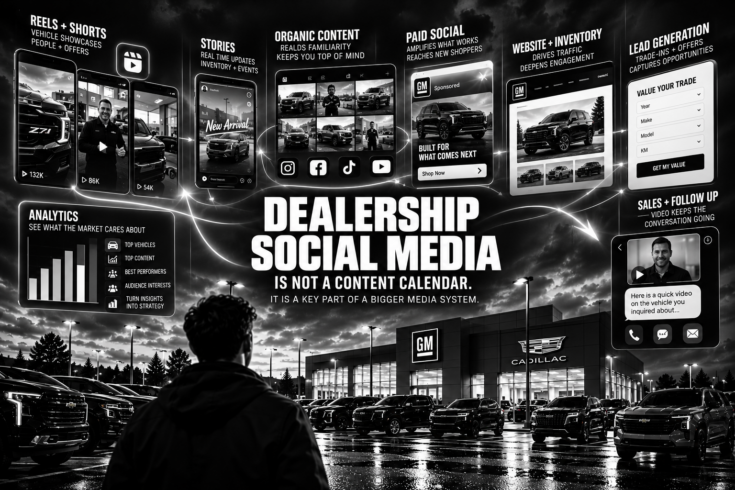
There is another reason dealership social media should sit inside a larger media system.
It produces signals.
Some vehicles attract disproportionate attention.
Certain people perform better on camera.
Some questions repeatedly generate engagement.
Certain offers create clicks.
Specific creative formats hold attention longer.
That information should not disappear into a monthly social media report.
It should influence what happens next.
Strong organic content can become paid creative.
Popular vehicle content can become YouTube content.
Customer questions can become search content.
High-performing hooks can inform advertising.
Repeated engagement can identify what the market currently cares about.
Now social media is doing something much more valuable than filling a feed.
It is helping the dealership read the market.
Stop Separating Organic + Paid Media
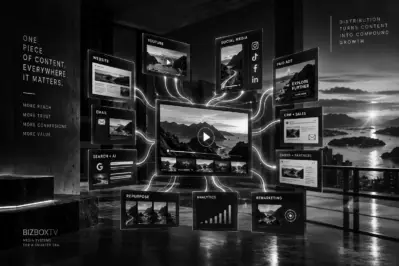
One of the strangest habits in dealership marketing is treating social media + advertising as entirely separate functions.
One person creates organic content.
Another vendor runs Meta Ads.
Someone else handles Google.
Another company manages the website.
Another platform handles inventory.
Everyone produces reports.
But the customer experiences one dealership.
The strongest organic signals should inform paid media.
Paid performance should influence future creative.
Search behaviour should influence video topics.
Inventory priorities should influence distribution.
Everything should be feeding everything else.
That is what turns individual marketing activities into a system.
Dealership Social Media Should Create Memory
The dealership does not need every person watching a Reel today to buy a vehicle today.
It needs enough of the right people to remember the dealership when their buying window opens.
That requires repetition.
Distinctiveness.
People.
Useful information.
Vehicles worth noticing.
Stories worth following.
And enough distribution for the market to actually see it.
The goal is not to win the content calendar.
The goal is to become difficult to forget.